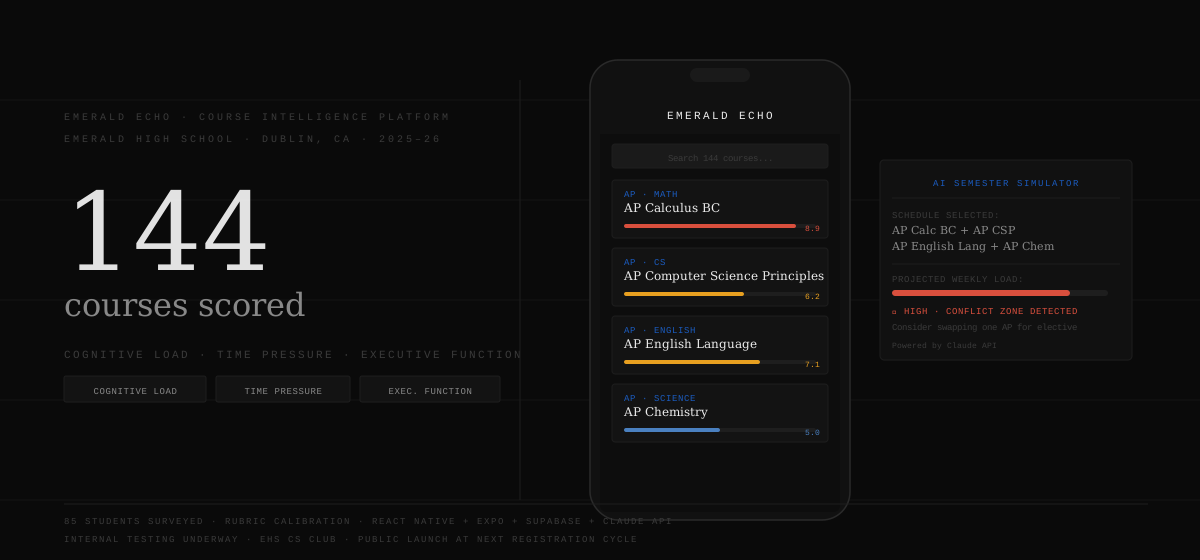
I scored all 144 courses in the Emerald High catalog. Students rate each class on three things, which turns into a Stress Factor score that actually tells you something. There's also an AI Semester Simulator built on the Claude API that lets you test a full schedule before you commit, so you can see your projected weekly load, spot the weeks that are going to pile up, and compare different paths.
Build a tool that gives EHS students real data on how hard a course is before they register, and add an AI Semester Simulator that lets them see the projected weekly workload for any combination of classes before they lock it in.
- —Designed the three-part scoring rubric (Cognitive Load, Time Pressure, Executive Function) based on research on student workload
- —Surveyed 85 EHS students across all grade levels to calibrate the scoring and make sure it stayed consistent
- —Scored all 144 courses in the EHS catalog using that rubric
- —Built the whole mobile app in React Native and Expo for both iOS and Android
- —Designed the Supabase database for the courses, ratings, saved schedules, and simulations
- —Connected the Claude API to run the Semester Simulator, which projects the weekly workload and flags the weeks that are going to overload you
- —Running internal testing with CS Club members at EHS right now and changing the UI based on what they say
- —How to build mobile apps with React Native and Expo, which is a pretty different way of thinking than web development, especially the navigation and the native UI components
- —How to put an AI API into a feature people actually use: writing the prompts, handling responses that come back different lengths, and dealing with the wait time inside a mobile app
- —How to design a database for a multi-user app where people create their own ratings and save their own schedules
- —How to calibrate a rating system so two different people score the same class the same way. The calibration survey was honestly harder to get right than the app itself
- —How to improve a product from real feedback. What early testers got confused by was usually not what I assumed they would get confused by
EHS students have no real way to know how a class is going to feel before they take it. Grade distributions are out there, but they don't tell you how mentally demanding a class is, how many hours a week it takes, or how much constant focus it needs. I built Emerald Echo because I messed up my own schedule sophomore year. I stacked a bunch of heavy classes together without realizing how much they would add up week to week, and I wanted to build the thing that would have warned me.
I set up three things to measure, based on research on student workload: Cognitive Load (how mentally hard each session is), Time Pressure (weekly hours plus how tightly the deadlines stack), and Executive Function (how much task-switching, long-term planning, and keeping track of yourself a class needs). I surveyed 85 students to calibrate the rubric so two different people would score the same class about the same. Once that was set, I scored all 144 EHS courses and built the app in React Native and Expo, with Supabase as the backend and Claude running the Semester Simulator.
The 144-course database is done. The app can browse, filter, and compare courses. The Claude Semester Simulator is connected, so students pick a set of classes and get a projected weekly load with the rough weeks flagged. Right now it's in testing with CS Club members at EHS, and I'm planning to launch it for the whole school at the next registration cycle.